

The Royal Palace in Phnom Penh stands as a magnificent symbol of Cambodia’s monarchy, culture, and history. Located in the heart of the capital city, the palace complex offers visitors a rare opportunity to explore traditional Khmer architecture, royal ceremonies, and historical artifacts that have shaped Cambodia’s identity for centuries. This article will guide you through the history, architecture, key buildings, and cultural significance of the Royal Palace, making it a must-visit destination for travelers and history enthusiasts alike.
History of the Royal Palace
The Royal Palace was originally constructed in the 1860s during the reign of King Norodom, who moved the capital from Oudong to Phnom Penh. This strategic move was intended to strengthen royal authority and establish a permanent residence closer to the Mekong River, a vital artery for trade and transport. Since then, the palace has undergone various restorations and expansions under different monarchs, reflecting Cambodia’s political changes and cultural evolution.
Throughout Cambodia’s turbulent history, including the French colonial period and the Khmer Rouge regime, the Royal Palace has remained a symbol of stability and continuity for the Cambodian people. Today, it serves not only as the residence of the current King but also as a ceremonial site for royal events, state functions, and religious ceremonies.
Architectural Style and Layout
The Royal Palace showcases exquisite Khmer architecture combined with influences from French colonial design. Its layout is designed to reflect traditional cosmology and royal symbolism, with buildings arranged to honor the monarchy’s divine authority.
The Throne Hall (Preah Thineang Dheva Vinnichay)
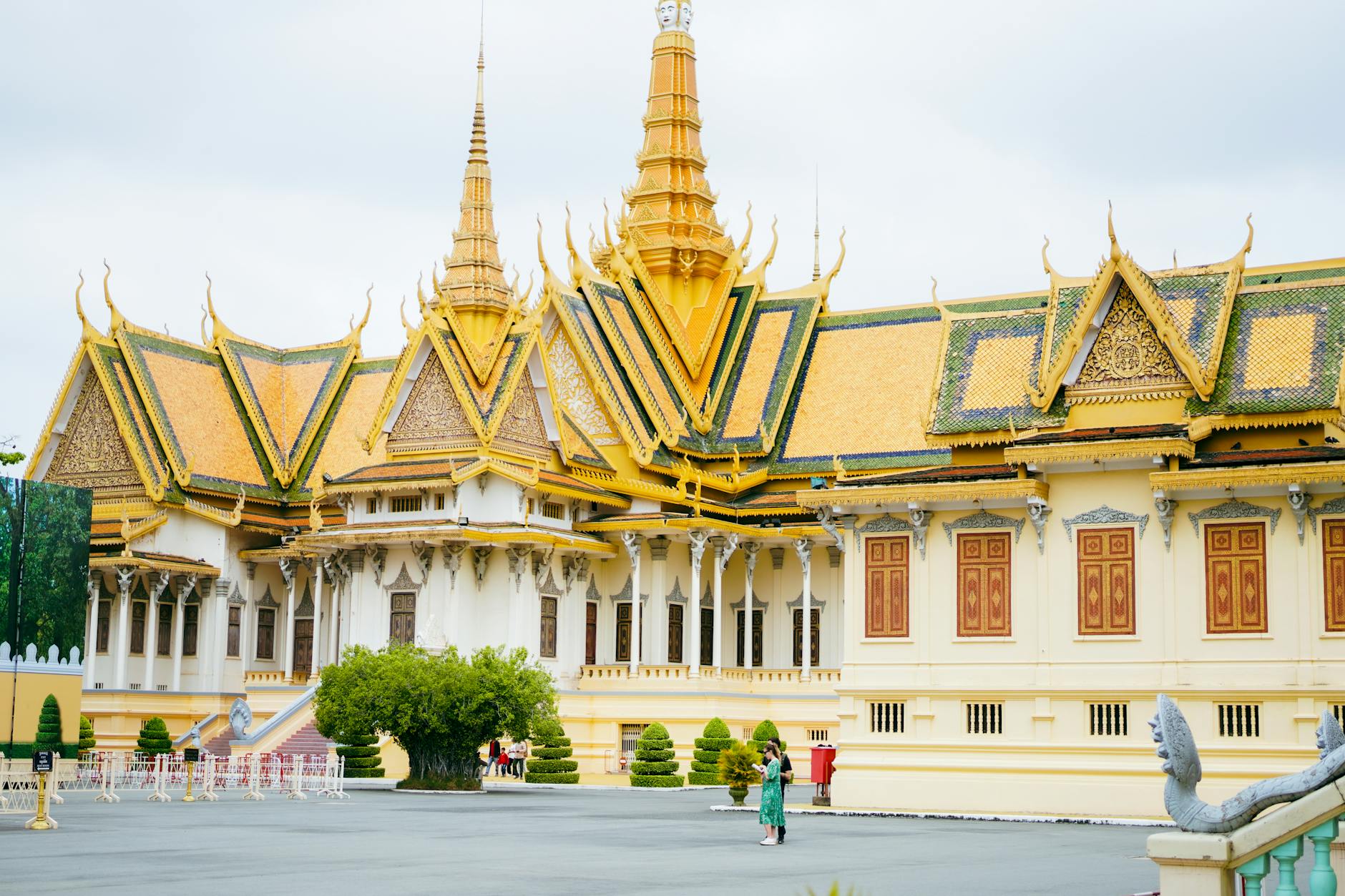
The Throne Hall is the centerpiece of the palace complex and is used for official ceremonies such as coronations, royal weddings, and receiving foreign dignitaries. This grand hall features a multi-tiered roof adorned with golden spires and intricate carvings of mythical creatures from Khmer mythology. The interior is richly decorated with traditional motifs, vibrant colors, and luxurious materials, embodying the power and majesty of the Cambodian monarchy.
The Silver Pagoda (Wat Preah Keo Morakot)
Also known as the Temple of the Emerald Buddha, the Silver Pagoda is renowned for its floor, made up of over 5,000 silver tiles, giving it a shimmering appearance. Inside the pagoda, visitors can admire an impressive collection of Buddha statues, including a life-sized gold Buddha encrusted with diamonds and a crystal Buddha from the 17th century. The Silver Pagoda serves as a religious site where the king and monks perform Buddhist rituals and prayers.
The Khemarin Palace and Other Buildings
The Khemarin Palace, built in the early 20th century, serves as the official residence of the King. Other notable buildings include museums displaying royal artifacts, traditional musical instruments, and historical photographs. The palace grounds are beautifully landscaped with manicured gardens, fountains, and sculptures, creating a serene environment that complements the grandeur of the architecture.
Cultural Significance
The Royal Palace is not just a historic monument; it remains a living center of Cambodia’s cultural and spiritual life. It hosts important royal ceremonies such as the Water Festival celebrations, Pchum Ben (Ancestor’s Day), and the Khmer New Year festivities. These events attract both locals and tourists, providing a unique insight into Cambodian traditions and the continued reverence for the monarchy.
The palace also plays a crucial role in preserving Cambodia’s artistic heritage. Traditional crafts such as silk weaving, classical dance, and sculpture are showcased during cultural events, many of which are held on the palace grounds. This helps promote national pride and educates younger generations about their rich history.
Visiting the Royal Palace
For visitors, the Royal Palace offers an unforgettable experience combining history, art, and spirituality. The palace is open to the public daily, with guided tours available to provide detailed explanations of each building’s history and significance. Visitors should dress modestly and respectfully, as the palace is a sacred site.
Nearby attractions such as the National Museum of Cambodia and the riverside promenade make Phnom Penh’s Royal Palace area a perfect day-trip destination. Photography is allowed in most areas, but flash photography and touching artifacts are prohibited.
Practical Information
- Location: Sothearos Boulevard, Phnom Penh, Cambodia
- Opening Hours: 8:00 AM to 5:00 PM daily
- Admission Fee: Around $10 USD (subject to change)
- Best Time to Visit: Early morning to avoid crowds and heat
Conclusion
The Royal Palace in Phnom Penh is a must-visit site for anyone interested in Cambodia’s royal heritage, architecture, and culture. Its rich history, breathtaking buildings, and cultural activities provide a deep understanding of the country’s identity. Whether you are a history buff, a culture lover, or simply a curious traveler, the Royal Palace offers an inspiring glimpse into the heart of Cambodia.




 Anna KH
Leave a comment