
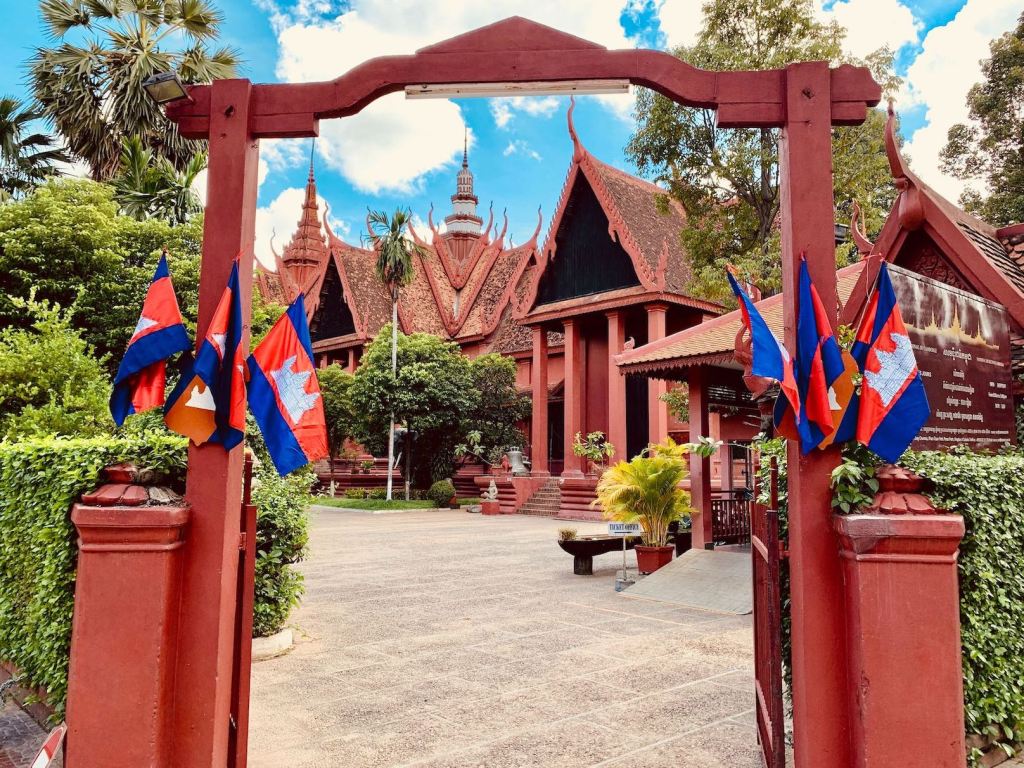
Nestled in the heart of Phnom Penh near the Royal Palace, the National Museum of Cambodia (សារមន្ទីរជាតិ) is a treasure trove of Khmer history, art, and spirituality. As Cambodia’s largest museum of cultural history and archaeology, it houses over 14,000 artifacts, making it one of the most important cultural institutions in Southeast Asia.
📜 History and Architecture
The museum was inaugurated in 1920 under the direction of French historian Georges Groslier. Its architecture reflects traditional Khmer design, characterized by terracotta-red walls, sloping tiled roofs, and ornate naga (serpent) figures. Inspired by ancient temples, the building itself feels like a historical monument.
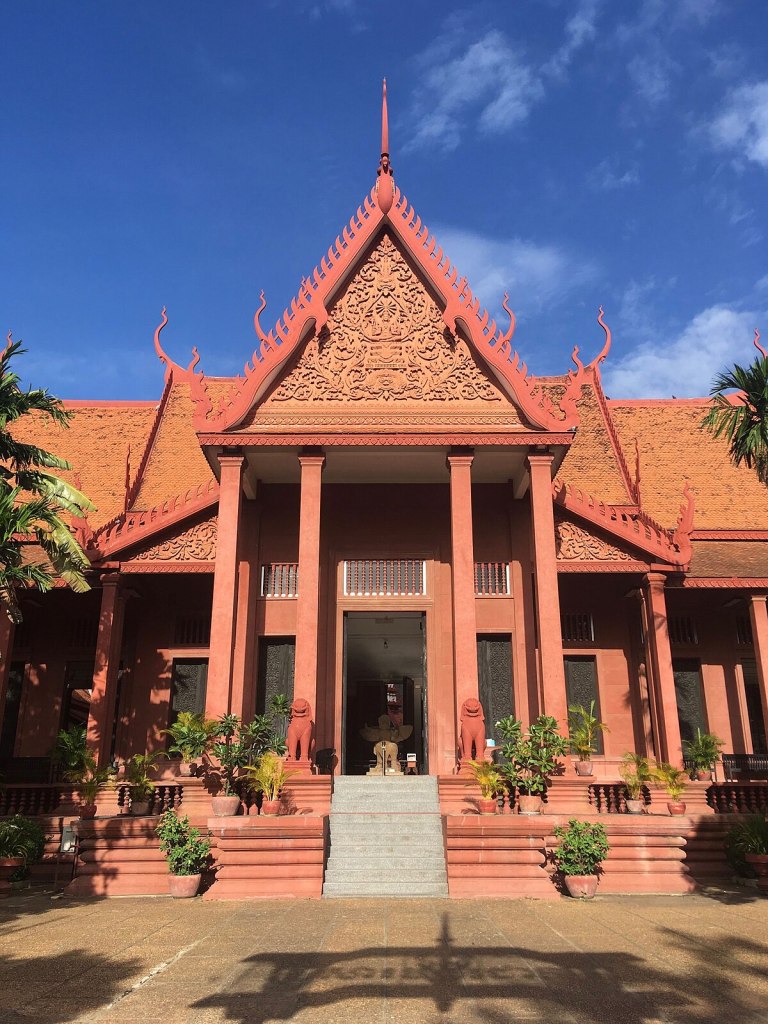
The museum was closed during the Khmer Rouge regime (1975–1979), when many artifacts were damaged or looted. It reopened in 1979 and has since undergone restoration, including the addition of new galleries and a conservation lab.
🗿 The Collection: A Glimpse into the Past
The National Museum’s collection spans prehistory to the post-Angkorian period, offering a fascinating overview of Cambodia’s cultural and religious evolution.
1. Pre-Angkorian Period
Artifacts from the 4th to 9th centuries include bronze tools, pottery, and statues, reflecting the early stages of Khmer civilization. Highlights include pieces from the Funan and Chenla kingdoms.
2. Angkorian Period
This is the museum’s largest and most iconic collection. You’ll find:
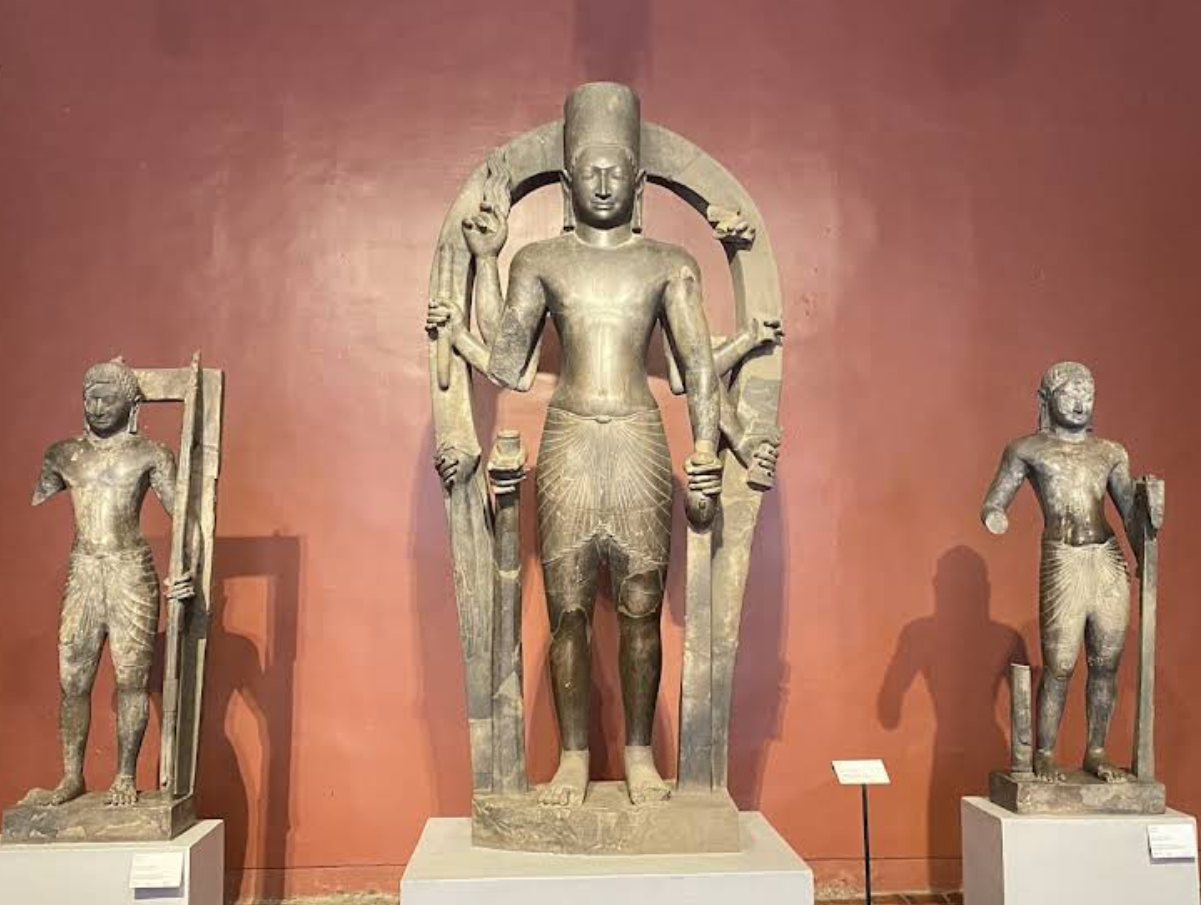
- A 6-armed Vishnu statue from Phnom Da (6th century)
- Stone carvings of Shiva and Ganesha
- Buddha statues from various regions of the Khmer Empire
These masterpieces illustrate the fusion of Hinduism and Buddhism in Khmer culture.
3. Post-Angkorian Period
The later galleries contain Buddhist relics, royal regalia, and examples of traditional Khmer clothing and instruments. This section shows how Khmer culture continued to evolve even after the fall of Angkor.
🌿 The Courtyard Experience
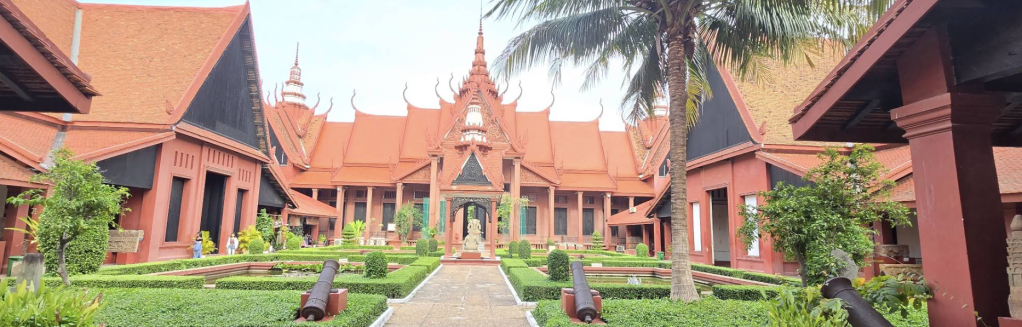
At the center of the museum is a serene courtyard garden, complete with lotus ponds, sculptures, and shaded walkways. It’s a peaceful space where visitors can pause, reflect, and enjoy the aesthetics of traditional Cambodian landscaping.
🎒 Visitor Essentials
| Feature | Details |
|---|---|
| 📍 Location | Chey Chumneas (Street 13 & 178), north of the Royal Palace (en.wikipedia.org) |
| 🕒 Opening Hours | Daily, typically 8:00–11:30 & 14:30–17:00 (check current schedule) |
| 🎟️ Admission | A few USD (e.g., $10 for adults); children and students often free or discounted |
| 📸 Photography Rules | Exterior & courtyard allowed; galleries generally no photography |
| 🎧 Guided Tours | Arrange at entrance. Tours in multiple languages available |
| 🚧 Facilities | Cloakroom onsite; souvenir shop at entrance |
Quick Tip: Visit in the morning or late afternoon to avoid the heat and crowds. Wear modest clothing as a sign of respect.
🔍 Must-See Highlights
If you’re short on time, make sure to see these:
- The Vishnu from Phnom Da – a fine example of 6th-century Khmer art
- The Leper King – an iconic sandstone statue from Angkor Thom
- Jayavarman VII statue – one of Cambodia’s greatest Buddhist kings
- Bronze elephant bell – an impressive ceremonial piece
- Wooden palanquin – used by Cambodian royalty
Each piece tells a part of the larger Khmer story.
🧭 How to Get There
The museum is located in central Phnom Penh, making it easy to reach by tuk-tuk, Grab, or walking if you’re nearby. Use this Google Map location:
📍 National Museum on Google Maps
Book Me Bus go now 😉👇

✨ Final Thoughts
The National Museum of Cambodia is more than a building of ancient relics—it’s a living, breathing record of Khmer identity. Whether you’re a history buff, art lover, or traveler curious about Cambodian culture, this museum is a must-see.
By including it in your Phnom Penh itinerary, you’re not just seeing artifacts—you’re connecting with a civilization that continues to inspire the world.





 Anna KH
Leave a comment