
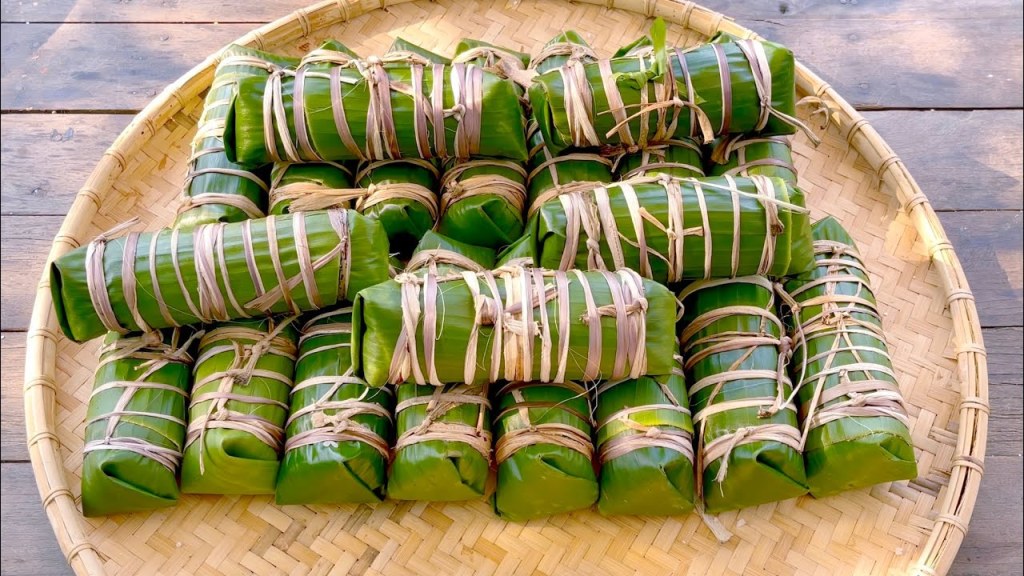
When it comes to traditional Cambodian desserts that bring both nostalgia and celebration to the table, few rival the cultural significance of Num Ansom (នំអន្សម). These sticky rice cakes wrapped in banana leaves are more than just a snack—they’re a symbol of Cambodian identity, passed down through generations, deeply woven into religious festivals, family celebrations, and everyday life.
🌿 What is Num Ansom?
Num Ansom (also spelled “Nom Ansom”) is a sticky rice cake traditionally made with glutinous rice, mung beans, and either pork belly or banana as the filling. It is tightly wrapped in banana leaves, tied securely with natural twine or banana fibers, and steamed or boiled for hours.
This Khmer delicacy is cylinder-shaped—usually 10–15cm long—and is often served during festivals such as:
- Pchum Ben (បិណ្ឌបិណ្ឌ) – Ancestors’ Day
- Khmer New Year (បុណ្យចូលឆ្នាំខ្មែរ)
- Weddings & housewarming ceremonies
In Khmer culture, Num Ansom Chek refers to the banana version 🍌, while Num Ansom Chrouk includes savory pork 🐷 and is favored during traditional ceremonies.
🧾 Ingredients of Num Ansom
While variations exist across regions, the standard ingredients of Num Ansom include:
Sticky Rice Base:
- 🍚 Glutinous rice (sticky rice)
- 🥥 Coconut milk
- 🧂 Salt
Filling:
- For sweet version (Num Ansom Chek):
- 🍌 Ripe bananas (usually Pisang Awak variety)
- Optional: Palm sugar, shredded coconut
- For savory version (Num Ansom Chrouk):
- 🐷 Marinated pork belly
- 🌰 Cooked mung beans
- 🧄 Garlic, black pepper
Wrapping:
- 🍃 Banana leaves (fresh or softened)
- 🧵 Twine (banana fiber or string)
👩🍳 How It’s Made (Traditional Method)
- Soak sticky rice overnight and drain.
- Mix rice with coconut milk and salt for flavor.
- Prepare the filling:
- For sweet: peel and slice ripe bananas.
- For savory: stir-fry pork belly with garlic, black pepper, and combine with mung beans.
- Lay banana leaves flat, place rice, then filling, then more rice on top.
- Roll tightly into a cylindrical shape and secure both ends.
- Steam or boil for 2–4 hours, depending on size.
- Let cool before serving. Num Ansom can be kept for several days at room temperature or refrigerated.


📍 Where to Find Num Ansom in Cambodia
Although Num Ansom is often homemade, you can still find them in Cambodian wet markets and street stalls, especially during holidays.
Food now♨️

Get up to $ 6.00 off your first few orders with foodpanda!
Here are a few popular spots in Phnom Penh to grab a fresh Num Ansom:
- Phsar Thmey (Central Market)
- Phsar Chas (Old Market)
- Phsar Kandal Market
- Russian Market (Tuol Tom Poung)
- Local street vendors near pagodas during Pchum Ben
Book Me Bus go now 😉👇

🙏 Cultural Significance of Num Ansom
In Khmer culture, Num Ansom is more than food—it’s a spiritual offering and cultural emblem. It is commonly placed on altars and offered to ancestors during:
- 👻 Pchum Ben (បិណ្ឌបិណ្ឌ) – to honor deceased relatives
- 🏠 House blessing ceremonies
- 💒 Weddings, as part of traditional dowry baskets
- 📿 Pagoda events, gifted to monks and shared among villagers
A unique tradition called “Bong Em Bong Bon” involves gifting Num Ansom to friends and relatives as a sign of gratitude and respect.
🌍 Num Ansom Compared to Other Southeast Asian Sticky Cakes
| Country | Name | Similarity to Num Ansom |
|---|---|---|
| Vietnam 🇻🇳 | Bánh Tét / Bánh Chưng | Wrapped rice cakes, steamed, often savory |
| Thailand 🇹🇭 | Khao Tom Mad | Banana-filled sticky rice wrapped in leaves |
| Laos 🇱🇦 | Khao Tom | Similar shape and ingredients |
| Philippines 🇵🇭 | Suman | Rice and coconut milk wrapped in banana leaf |
Despite these regional similarities, Num Ansom holds a uniquely Khmer meaning, especially in ceremonies.
🤤 Why You Should Try Num Ansom
If you ever visit Cambodia—or find a Khmer food festival near you—Num Ansom should be on your must-eat list. Here’s why:
- ✅ Rich flavor – sweet or savory, always satisfying
- ✅ Naturally gluten-free
- ✅ Culturally significant – taste history in every bite
- ✅ Travel-friendly – great for snacks or gifts
- ✅ Vegan option available (banana version)
You don’t just eat Num Ansom—you unwrap a story, a tradition, and a taste of Cambodia’s heart. 💝🇰🇭
📚 Final Thoughts
From its sacred role in religious rituals to its comforting presence on the family table, Num Ansom stands as a proud testament to Cambodia’s culinary and cultural heritage. Whether filled with sweet banana or savory pork belly, this humble rice cake has delighted generations and will continue to be a staple in Khmer cuisine.
So, next time you unwrap one, take a moment to appreciate the layers of flavor—and the layers of meaning—it holds. 🧺🍴





 Anna KH
Leave a comment