


Things to Do in Phnom Penh: 15 Best Activities (2026 Local Guide)
Looking for the best things to do in Phnom Penh? This 2026 local guide covers top attractions, historic sites, and markets.
My name is Anna, and Phnom Penh is my entire universe. I was born and raised here. Sweating through school uniforms, I ate street noodles before class. Many evenings were spent watching the Mekong shimmer gold at sunset. Most travelers completely miss what makes my city special. They rush to Angkor Wat and treat Phnom Penh like a short stopover.
This guide gives you the real heartbeat of Cambodia. I am a Cambodian woman who has lived here my whole life. I want you to smell grilled pork at dawn. You will hear tuk-tuks laughing past each other.
Phnom Penh is intense, hot, and loud. However, she is also a city of soft river light and warm smiles. The real attractions extend far beyond museums. Look for people grilling skewers and monks on morning alms rounds. Market aunties shout over piles of fresh mangoes. Give this city more than 24 hours. She will get under your skin in the best way possible.
Here are the 15 best things to do in Phnom Penh.
Top Things to Do in Phnom Penh for Culture & History
1. Visit the Royal Palace & Silver Pagoda 👑
To understand the royal soul of Cambodia, start at the Royal Palace. This palace serves as the official residence of our King. It stands as an iconic sight in Phnom Penh. Elegant white buildings and golden roofs define the complex. Beautiful gardens line every walkway. On a clear morning, golden spires glow brightly in the sunlight.

Inside the complex lies the famous Silver Pagoda. People also know it as Wat Preah Keo. Over 5,000 solid silver tiles cover the floor. Each tile feels cool under your feet.
Essential Visitor Info & TipsWhen I was a kid, my parents brought me here on public holidays, and I remember the first time I understood why it’s called the Silver Pagoda. The entire floor is made of more than 5,000 solid silver tiles. Each one feels cool and heavy under your feet. I was strictly told, “Anna, don’t run.” Naturally, tiny me decided to run very quietly, taking little fast steps and trying not to clack the tiles. I still remember that thrilling feeling of breaking the rules just a little, surrounded by all that history.

The pagoda houses incredible sacred treasures. Visitors can see the famous Emerald Buddha made of fine crystal. Standing nearby, a gold Buddha features 9,584 diamonds. It remains a living spiritual heart for our entire country.
Practical info: Entry to the palace costs around $10 for foreigners. The site opens daily to guests. Keep in mind that royal ceremonies can sometimes affect opening hours.
You must follow a strict dress code. Shoulders and knees must stay covered at all times. Arrive early in the morning right when gates open. The air feels cooler then. Going early also helps you avoid big tour groups.
2. Learn History at Tuol Sleng Genocide Museum (S-21) 🕊️
Tuol Sleng was once an ordinary high school. In 1975, the Khmer Rouge regime took control. Officials turned the school into S-21. The site became a brutal prison where thousands suffered and died.
Today, the complex serves as a genocide museum. It honors the victims and preserves our country’s history. Visiting here can feel emotional. Even so, it helps travelers truly understand Cambodia.

Inside the old classrooms, original metal bed frames remain. Mugshots of former prisoners line the concrete walls. Men, women, and children look back at you.
Outside, quiet courtyard trees contrast with this dark past. Most Cambodian families lost relatives during this era. Learning this history reveals the incredible strength of our people today.
For me, this history is deeply personal. My grandparents survived the Khmer Rouge period. They don’t talk about it often, but when they do, it’s in quiet voices and with long pauses. Growing up, I learned that almost every Cambodian family lost someone in those years. This is why I always say: if you want a meaningful Phnom Penh travel guide, Tuol Sleng is not optional. Understanding this history is essential to understanding Cambodia today. The fact that we laugh, welcome strangers, build businesses, and smile so brightly it all sits on top of this past.
Practical info: Entry costs around $5 per person. Guests can hire a guide or pay for an audio headset. The audio tour provides excellent background detail. The museum is open daily from 8AM to 5PM. Wear comfortable clothing for your walk. Remember to speak softly throughout the museum premises. Plan to spend about two hours exploring the site.
3. Pay Respects at Choeung Ek (The Killing Fields) 🌸
Choeung Ek sits about 15 kilometers south of the city. During the Khmer Rouge era, thousands arrived here from S-21. It remains the best-known site among hundreds of killing fields across Cambodia. Today, the park serves as a peaceful memorial for all those lost.

At the center stands a large glass memorial stupa. The structure holds more than 8,000 human skulls organized by age and gender. Exploring this space feels quiet and somber. The audio guide offers an incredible experience. Listeners hear personal stories from survivors and guards. Walking past mass graves while listening helps you connect with true history.
As you walk, survivors and witnesses narrate what happened here not to shock you, but to help you understand. You’ll hear about people who lived through it, about the workers forced to dig graves, about the efforts to recover and honor the dead after the fall of the regime. The guide includes moments of silence where you simply stand and listen to the wind, the birds, and maybe your own heartbeat. Whenever I bring foreign friends here, I watch their faces change. They arrive as tourists; they leave with a much deeper sense of respect and connection to Cambodia.
As I always tell my friends: “I bring every foreign friend who visits me here. Not to make them sad. But because understanding where we came from makes you understand why Cambodians smile so bright today.” It is a difficult place, but also a place of healing and remembrance.
Practical info: Entry costs around $6 and includes the audio tour. Tuk-tuks usually charge about $15 to $20 for a round trip. Try to combine this visit with Tuol Sleng on the same morning. Always wear modest clothing to show respect. Give yourself at least 2 to 3 hours for the visit and don’t plan anything too loud or intense immediately afterward. Many visitors combine Tuol Sleng (S-21) and Choeung Ek in one day it’s emotionally heavy, but if you have limited time, it’s an important way to understand Cambodia’s recent history.
4. Stroll the Riverside: Essential Things to Do in Phnom Penh 🌅
Sisowath Quay stretches along the western bank of the Tonle Sap River. The area comes alive in the late afternoon. Locals gather along the water to exercise, socialize, and watch boats pass. It offers one of the best spots to observe daily life in Phnom Penh.

In the early morning, around 5:30 or 6AM, the riverfront feels like a secret world. The air is cooler (trust me, you will be grateful), and the sky is soft pink and blue. You’ll see monks walking barefoot collecting alms, aunties doing outdoor aerobics to very loud music, old men stretching, teenagers scrolling on their phones, and coffee sellers balancing trays with plastic cups and condensed milk. Grab a $1 iced coffee from a street cart, sit on the low wall, and just watch life unfold. This is Phnom Penh for tourists who want to see the real, unsanitized city.
Endless street food stalls line the wide walkways. Sample grilled meatballs, fresh coconut water, or crispy waffles. Children chase pigeons while families sit on plastic stools. During dusk, the sunset paints the river in pink and orange tones.
For me, this promenade is deeply personal. I’ve walked here after school, after breakups, after big exams, and on random Tuesday evenings when I just needed fresh air. It’s where I feel most like myself just another Phnom Penh girl among thousands, part of a city that is always moving, always alive.
Practical info: Begin your stroll near the Night Market and walk south toward the Royal Palace. The evening air brings a pleasant cooling breeze. Keep an eye on your phone and bag. Sometimes motorbikes snatch unattended items near the road.
5. Marvel at Artifacts at the National Museum of Cambodia 🏺
Located right beside the Royal Palace, this museum holds the world’s largest collection of Khmer art. Thousands of ancient sculptures, bronzes, and ceramics fill the halls. Many displayed items date back to the pre-Angkor and Angkor eras.


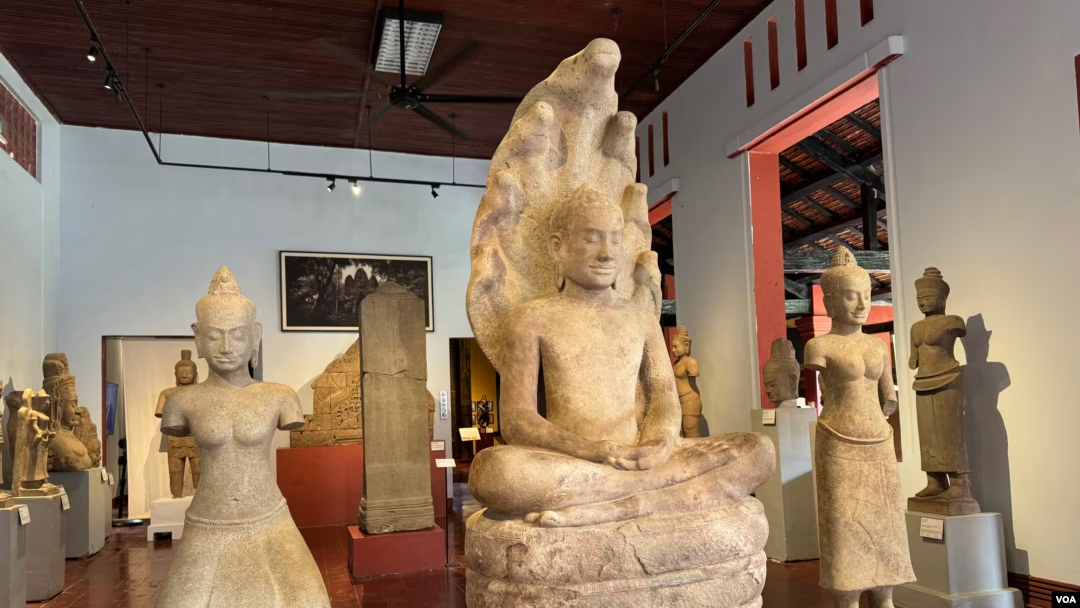
The building itself features striking traditional red terracotta design. At the center lies a quiet courtyard garden filled with lotus ponds. The space offers a calm spot to sit and rest between gallery tours.
My favorite part isn’t even a gallery; it’s the central garden courtyard. There’s a serene pond with lotus flowers, green plants, and quiet corners where you can sit and breathe. Look up at the wooden rafters and, if you’re lucky, you’ll see the resident fruit bats hanging upside down, sleeping like little winged bundles. The first time I brought a friend here, she looked up, gasped, and then started laughing it feels like a secret joke the museum shares with anyone who looks closely enough.
Practical info: Entry costs around $10 for international guests and the museum is usually open daily from 8AM to 5PM. You can rent an informative audio guide right at the front desk. Photography inside main galleries remains restricted, but guests can take photos in the courtyard.
6. Explore the Central Market (Phsar Thmei)
Built in 1937, Central Market stands as an Art Deco masterpiece. A giant yellow dome features four massive wings extending outward. The venue was once one of the largest markets in Asia. Even without buying anything, the architecture warrants a visit.

Inside the central dome, jewelers sell gold, silver, and gemstones. Outer wings offer clothing, souvenirs, electronics, and flowers. Shoppers can find local cotton scarves, known as kramas, at great prices.
Friendly bargaining is customary here. Always negotiate politely with a warm smile. The central food court serves hot local dishes like Nom Banh Chok noodle soup. Arrive in the morning to beat the intense afternoon heat.
This is a fantastic place to buy souvenirs: silks, spices, coffee, and especially kramas, traditional Cambodian scarves. Prices are usually negotiable, but remember: smile, be polite, and don’t haggle aggressively. Many sellers are small family businesses. If you’re fair and friendly, they will be too.
Practical info: The best time to visit is early morning, when the fresh food section is busiest and most colorful, and the temperature inside the dome is still bearable. Wear light clothes and comfortable shoes. Keep small bills in USD or Riel handy. Central Market is quite central and easy to reach by tuk-tuk from most parts of the city just say “Phsar Thmei” and every driver will know. For anyone wondering what to do in Phnom Penh if you love markets and people watching, put this near the top of your list.
7. Hunt for Treasure at the Russian Market (Phsar Tuol Tom Poung) 🎨
This venue gained its name in the 1980s when Russian expats shopped here. The interior feels dark, warm, and tightly packed with narrow alleys. It delivers some of the best shopping options in the entire city.

Stalls display wooden carvings, silver jewelry, and brass statues. Many vendors sell overstock clothing from major factory brands at low prices. Deep inside, small workshops repair motorbikes and carve custom stamps.
Around the perimeter of the market, you’ll find fantastic street food. My favorite? Grilled pork skewers for about $0.50 each, served with pickles and rice or baguette. The smell of the smoke and caramelized meat fills the air, and honestly, I’m getting hungry just writing this. This is Phnom Penh for tourists who want to eat like locals standing by a tiny plastic table, wiping sweat from your forehead, and thinking, “Okay, this was absolutely worth it.”
Bargaining here is expected, but like I always say: be kind. Most stalls are family businesses, and a few cents to you can mean something to them. Smile, make jokes, and don’t push too hard. You’ll both walk away happy.
Practical info: The market interior gets very hot by midday. Take regular breaks at the iced coffee stalls near the center. Taste local Cambodian iced coffee mixed with sweet condensed milk. The drink feels strong, cold, and refreshing.
8. Sunset Cruise: One of the Best Things to Do in Phnom Penh 🛥️
Now let’s talk about one of the most underrated things to do in Phnom Penh: a sunset cruise on the Mekong. I have no idea why more people don’t do this, because it is honestly one of the most magical experiences my city can offer. Standing on a boat, warm wind in your hair, watching the sky turn orange and pink while the city glows on the banks it’s the kind of moment that makes you fall in love with travel all over again.
Phnom Penh sits at the junction of four major river arms. Boarding a boat ride provides a fresh perspective of the city. Modern glass skyscrapers rise alongside traditional wooden fishing vessels.

As your boat glides forward, you pass quiet floating villages. Cool breezes blow off the water to relieve city heat. The setting sun behind the skyline creates perfect photo opportunities.
Practical info: Boats dock along Sisowath Quay near the night market. Standard group cruises cost around $5 to $10 per person. Most trips include a complimentary cold drink or local fruit. Sunset rides usually depart around 5:00 PM.
Fun Things to Do in Phnom Penh at Night
9. Explore Night Markets: Fun Things to Do in Phnom Penh at Night 🌙
If you want to understand a city’s soul, go where people eat. In Phnom Penh, that means heading to the night markets once the sun goes down. Around 5PM, stalls start to appear like magic, grills are fired up, and suddenly the air smells like charcoal, garlic, lemongrass, and sugar. This is one of the most delicious answers to the question “What to do in Phnom Penh at night?”

Some of my favorite spots include the Night Market on the riverside (near the northern end of Sisowath Quay), the Aeon Mall Night Market, and more local markets in areas like BKK1. Each has its own flavor, but they all share a few essentials: plastic mats for sitting on the ground, bright string lights overhead, and an endless variety of food that will test the limits of your stomach and your self control.
What to eat? Honestly: everything. Try grilled corn brushed with coconut milk, lok lak (stir-fried beef with a tangy sauce), fried noodles, freshly squeezed sugarcane juice, coconut ice cream served in a shell, crunchy spring rolls, and all kinds of barbecue skewers. When I was a kid, weekend night market trips with my family were a big treat. I remember the sound of sizzling meat, the sticky feel of plastic stools on my legs, and my parents telling me, “Okay, last snack,” which was always a lie because we’d keep finding more things to try.
Visiting a night market is not just about food it’s about feeling part of the crowd. Kids running around, teens taking selfies, grandparents sitting on mats sharing grilled fish, vendors shouting prices, K-pop or Cambodian pop music in the background. It’s chaotic, yes, but it’s also joyful. This is Phnom Penh at its most alive.
Practical info: Bring small cash in USD or Riel most stalls are cash only. Go with an open mind and an empty stomach. If you’re worried about hygiene, look for stalls that are busy with locals and where food is cooked to order. Night markets combine perfectly with an evening riverside walk or a Mekong sunset cruise for a full night of Phnom Penh 2026 magic.
10. Visit Wat Phnom : The Hill Temple 🛕
Wat Phnom sits on the only hill in the city. According to legend, a wealthy widow named Lady Penh found four bronze Buddha statues inside a tree trunk. She built a small shrine to protect them in 1372. Later, locals named the surrounding city after her.
According to legend, a wealthy woman named Penh found sacred Buddha statues in the river and built a shrine for them on top of this hill hence the name of the city: “Phnom” means hill, “Penh” is her name. Climb the stairs, and you’ll reach a peaceful temple complex with intricate carvings, flickering candles, and the smell of incense hanging in the air. On one side, you’ll usually see offerings of flowers, fruit, and sometimes even cans of soda modern gifts for ancient spirits.

A wide grand staircase lined with carved dragons leads up the hill. At the summit stands an active Buddhist temple filled with murals and incense. Keep snacks tucked away because wild monkeys roam the nearby trees.
Practical info: Entry for foreign visitors costs $1. The park makes for a quick, peaceful stop near the north end of town. Local residents frequently come here to pray for good luck and business success. And a big tip: watch out for the monkeys 🐒. They are cute, but they are also bold and very interested in your snacks, drinks, and sometimes even your phone. Don’t feed them, and keep your belongings close. Wat Phnom is a beautiful, symbolic stop on any Phnom Penh travel guide a little hill with a big story.
Essential Things to Do in Phnom Penh for First Timers
11. Discover BKK1 Phnom Penh’s Coolest Neighborhood ☕
When people ask me where to stay or hang out in Phnom Penh, my first answer is almost always Boeung Keng Kang 1 or BKK1 for short. This leafy neighborhood has become the coolest, safest, and most walkable area in the city, and it’s where expats, digital nomads, and stylish locals all orbit around cafés and co-working spaces.
Picture streets lined with trees and low-rise buildings, with cute signage for independent coffee shops, brunch spots, yoga studios, boutique clothing stores, and small art galleries. This is where you come when you want to sit with an iced latte, open your laptop (or your journal), and people watch while pretending to be productive. You’ll hear a mix of Khmer, English, French, and sometimes Korean or Chinese drifting past your table.

I love BKK1 for lazy afternoons. I’ll grab a strong iced coffee with sweetened condensed milk, find a corner in a cozy café, and watch the world go by students meeting for group projects, freelancers on Zoom calls, couples sharing cake, and sometimes older Khmer uncles trying their first cappuccino. It feels modern and international, but still very Cambodian at its core.
BKK1 is also a great place to shop for Cambodian designed clothing and accessories. Many young Khmer designers are opening small boutiques here, selling dresses, jewelry, and bags that blend traditional elements like silk and kramas with modern cuts. If you want something more authentic and wearable than a “I <3 Cambodia” T-shirt, this is the place to find it.
Practical info: BKK1 is centrally located and safe to walk at almost any time of day, though of course normal city common sense applies. It’s an ideal base for first time visitors to visit Phnom Penh close to major attractions but with its own relaxed energy. You can easily explore the area on foot, popping into cafés, grabbing street snacks, and discovering your own favorite corners of the neighborhood.
12. Taste Cambodian Craft Beer and Nightlife 🍻
You might not expect it, but Phnom Penh has a surprisingly fun and evolving craft beer and nightlife scene. If your idea of a perfect evening involves good drinks, conversation, and maybe a rooftop view, you’ll find plenty to love here in 2026.
Areas like Street 278 and parts of the riverside are dotted with bars ranging from tiny local joints with plastic chairs to stylish lounges with mixologists who take their cocktails very seriously. You can start your night with a craft beer from a local brewery like Kingdom Breweries, try our national beer Angkor, or sample locally made rice wine if you’re feeling adventurous (go easy it’s stronger than it looks!).

There are also great rooftop bars with city views some overlooking the river, others with panoramas of Phnom Penh’s growing skyline. Sitting on a rooftop here at night, with a light breeze and a cold drink, watching the traffic below and the lights reflecting on the water, is one of my favorite ways to end a long day. Cambodians love to celebrate, and you’ll find groups of friends sharing towers of beer, laughing loudly, and ordering way too much food.

My personal recommendation? Start your evening at a riverside bar to watch the sunset with a drink in hand. Then, once the sky turns dark, head to a street bar or small local pub in BKK1 or around Street 278 for more casual vibes, cheap drinks, and maybe some questionable karaoke. You don’t need to spend much a beer at a local spot is usually around $1 to $2, and happy hours can be very generous.
Practical info: Phnom Penh’s nightlife is generally relaxed and friendly, but as always, keep an eye on your drink and belongings, especially late at night. Tuk-tuks are easy to find to take you back to your hotel. If you’re planning your Phnom Penh 2026 itinerary and wondering what to do in the evenings, don’t skip this side of the city it shows you a lighter, more playful part of Cambodian life.
13. Get a $7 Khmer Massage 💆
Let’s be honest: Phnom Penh is hot. You will sweat. You will walk more than you planned. Your feet will complain. That’s why I consider a Khmer massage not a luxury, but an essential part of any Phnom Penh travel guide. After a long day of exploring, there is nothing better than lying down in a cool, dim room and letting a skilled therapist work the city out of your muscles.
Traditional Khmer massage usually involves firm pressure, stretching, and deep work on your muscles similar in some ways to Thai massage, but with its own techniques. A typical session costs around $7 to $12 per hour in a mid range place. You’ll stay clothed in loose garments or your own clothes, and the therapist will use hands, elbows, and sometimes feet to release tension. It can be strong, but afterward you’ll feel like you have a new body.

If you’re more into something gentle, go for a foot massage, which is about $5 to $8 per hour. Imagine this: you’ve spent the whole day walking around markets, temples, and museums in the heat, and now you’re sitting in a comfortable chair with cool air on your face while someone carefully massages every inch of your tired feet. Heaven. 😌
As I always tell my friends: “After a long day exploring in the heat, a Khmer massage is non-negotiable. Your legs will thank you.” Many massage centers also have a social mission, employing and training people with disabilities or from disadvantaged backgrounds, so your relaxation can also support a good cause.
Practical info: Look for massage places with good reviews, clean facilities, and clear menus with prices listed. Avoid any place that feels pushy or unclear about services. You’ll find options all over the city, especially in BKK1 and near popular hotels. Booking ahead is usually not necessary except at the most popular high end spas. Tip your therapist if you’re happy with the service a couple of dollars goes a long way.
14. Shop and Eat at AEON Mall 🛒
At some point in your Phnom Penh 2026 adventure, there will come a moment when you think, “If I stay outside one more minute, I will actually melt.” That’s when you go to AEON Mall. It might sound funny to include a shopping mall in a list of the best things to do in Phnom Penh, but trust me: when the heat index is unholy, AEON becomes your air conditioned paradise.
AEON is one of the largest malls in the city, with international brands, Cambodian retailers, a huge supermarket, a food court, and a cinema. You’ll see a very local side of Phnom Penh here: families with kids on the escalators, groups of teenagers taking photos, couples on movie dates, and aunties filling carts with groceries. It’s modern, busy, and very much part of everyday life.

My favorite part of AEON, though, is the supermarket. This is where I go to stock up on Cambodian snacks, instant noodles, tropical fruits, and local products at local prices. If you’re looking for affordable souvenirs, you’ll find Cambodian coffee, dried mango, Kampot pepper, sauces, and sweets that are perfect to bring home (and won’t gather dust like a random fridge magnet). Wandering the aisles is also just fun you’ll see flavors and brands that exist nowhere else.
The food court has a mix of international and local food, with meals usually ranging from $2–8. You can slurp noodles, eat sushi, grab bubble tea, or try Cambodian dishes in a very clean, easy environment. For families or anyone who needs a break from street heat and street food, AEON is a sanity saver.
Practical info: AEON Mall is family-friendly, safe, and very local. There are now multiple AEONs in Phnom Penh, but AEON 1 is the classic. You can reach it easily by tuk-tuk from anywhere in the central city. It’s a great place to cool down midday, restock toiletries, and pick up last minute gifts before you leave Phnom Penh.
15. Day Trip to the Mekong Island (Koh Dach) 🏝️
Koh Dach is a quiet island resting in the middle of the Mekong River. The atmosphere feels miles away from the busy traffic of Phnom Penh. Traditional wooden stilt houses sit under shade from green mango trees.
Local craftspeople on the island are famous for silk weaving. Visitors can tour family workshops to watch silk getting spun and dyed. Skilled weavers create intricate patterns on wooden looms.

You can visit local weavers’ homes to watch silk being made by hand from threads to finished scarves. The process is slow and meditative, and when you buy a silk scarf directly from the family who made it, you’ll know exactly where your money is going. I have a few favorite scarves from Koh Dach that I wear for special occasions; every time I put them on, I remember the sound of the shuttle moving back and forth on the loom and the smile of the woman who sold it to me.
One of my favorite ways to spend a day here is to rent a bicycle (about $2 to $3) and just ride past stilted wooden houses, kids shouting “hello!” and “bye bye!” in their best English, small fields, and shady mango groves. Stop whenever you like for sugarcane juice, fresh coconut, or a simple lunch at a local stall.
Practical info: Catch a short ferry ride departing from the northern riverbanks. Renting a bicycle or tuk-tuk offers the best way to explore local paths. Smooth dirt roads lead past rice fields, fruit orchards, and quiet village temples. The ferry to Koh Dach costs around $1 to $2 each way from a riverside pier a little way north of the city center. You can negotiate a tuk tuk to take you there, wait, and bring you back. Bring sunscreen, a hat, water, and cash.
Why Phnom Penh 2026 Should Be on Your Travel List
So many travelers still treat Phnom Penh as a quick stop on the way to Angkor Wat one or two nights, check off the “sad history” sites, and then move on. But the people who get the most from this city, the ones who look back and say, “Wow, I’m so glad I stayed,” are the ones who give it time. Because Phnom Penh is a city that surprises you. You come for the history and maybe the cheap beer, and you end up staying for the food, the riverside sunsets, the conversations with tuk tuk drivers, the laughter at night markets, and the feeling of being part of something raw and real.
Is it perfect? Absolutely not. Phnom Penh is chaotic, hot, and loud. The traffic will sometimes make you question your life choices. The humidity will turn your hair into a science experiment. You might get lost in a market and accidentally buy three types of snacks you don’t recognize (this is not a problem, by the way). But the city is also alive in a way that very few places are. There’s a sense of movement, of rebuilding, of people hustling and dreaming and making new lives out of old scars.

As someone who was born and raised here, who has seen this city change again and again, I would not trade growing up in Phnom Penh for anywhere else in the world. Every corner holds a memory for me: eating noodle soup on plastic stools before school, running (quietly) across the Silver Pagoda’s tiles, lighting incense at Wat Phnom with my parents, holding my friends’ hands in silence at Tuol Sleng, laughing too loudly on the riverside at night, watching the Mekong turn to molten gold at sunset for the thousandth time and still feeling amazed.
If you’re planning where to go in Southeast Asia in 2026 and you’re still wondering whether to visit Phnom Penh, consider this your sign: come. Let this city challenge you, move you, feed you, exhaust you, and fill you up again. Walk its markets, sit by its river, learn its history, and meet its people. I promise you by the time you leave, Phnom Penh will have claimed a small (or big) piece of your heart.
Planning a trip to Phnom Penh? Drop your questions in the comments I answer every single one as your personal local guide! 😊🇰🇭


[…] that give you views you would not have believed possible a decade ago. Whether you are planning things to do in Phnom Penh at night or just want a good drink above the city, the sky bar Phnom Penh scene has genuinely impressive […]